
Pivot Doors
Interior Pivot Doors, Made to Your Opening
Doors that turn on a pivot set into the floor and head instead of hanging on side hinges. Made to your opening, taller, wider or thicker than standard, in wood veneer, laminate, paint or any finish you need.
- Turns on a pivotCenter or offset axis
- Tall and wideMade to the sizes on your drawings
- Matched to your hardwareIn-door or in-floor pivot
- 12–14 weeksProduction start to delivery at your site
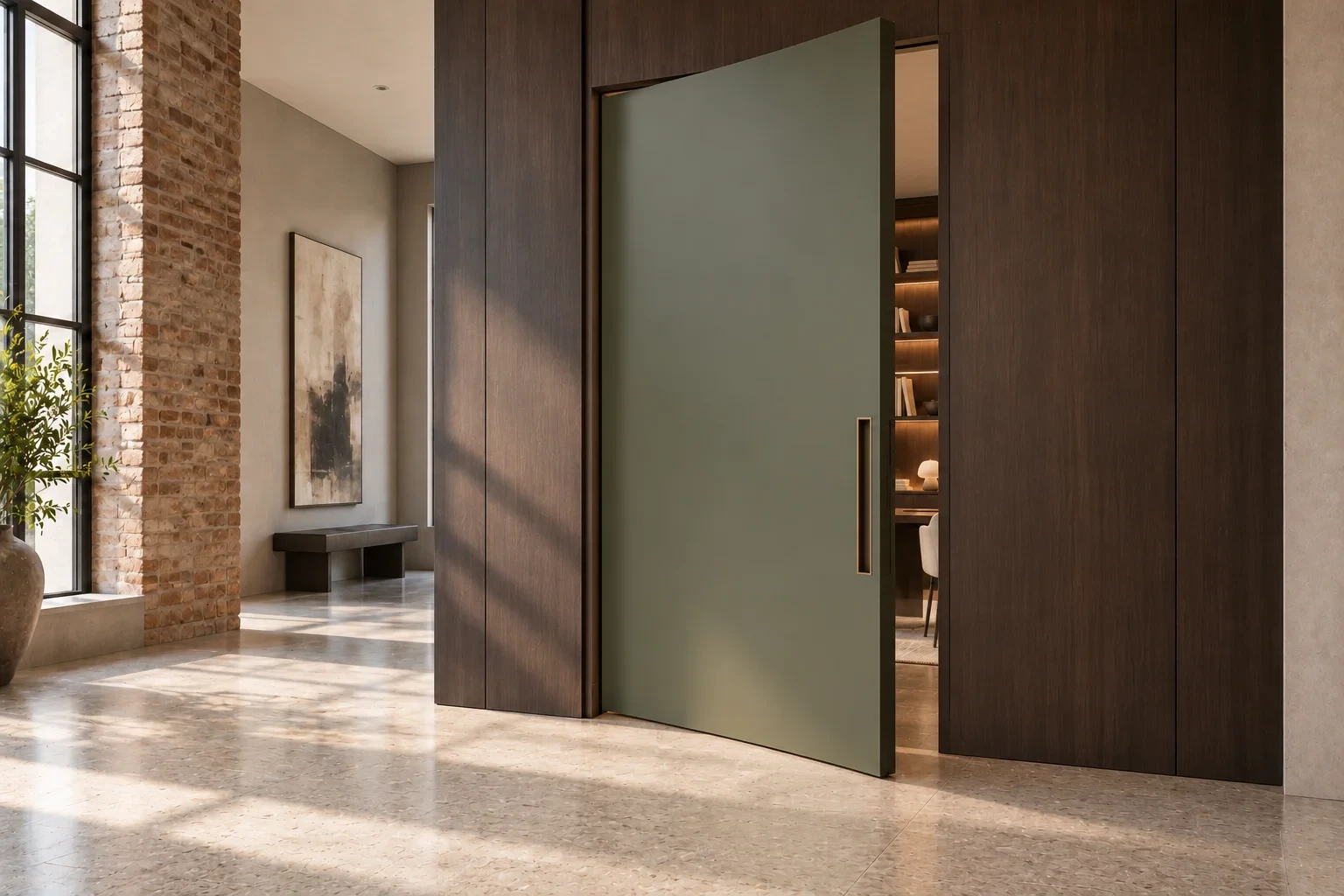
01 — How it works
Where the Weight Goes
A hinged door hangs on its jamb. A pivot door stands on the floor and is held upright at the head.
- Top pivotKeeps the door upright and aligned. It needs a solid head above the opening.
- Bottom pivotCarries the door’s weight down into the floor.
- The leafWith no side hinges along its height, the door itself has to stay flat.
- Floor gapPivot doors run with a gap at the floor, set by the pivot hardware.
- Head gapA smaller gap at the top. Side gaps depend on door thickness and pivot position.
02 — Popular styles
Popular Pivot Door Styles and Colors
Popular looks for interior pivot doors in U.S. homes. Each one is made to your opening.
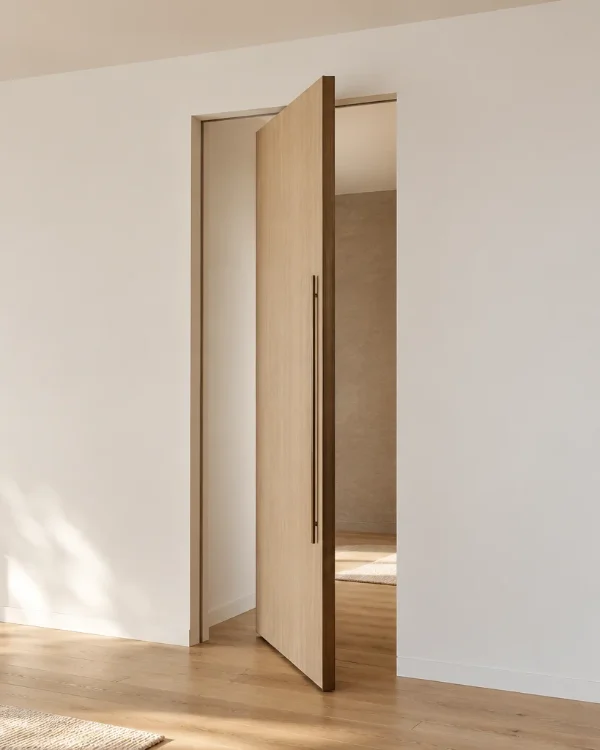
Flush wood veneer
A plain veneer slab with continuous grain and a long vertical pull.Living areas, primary suites
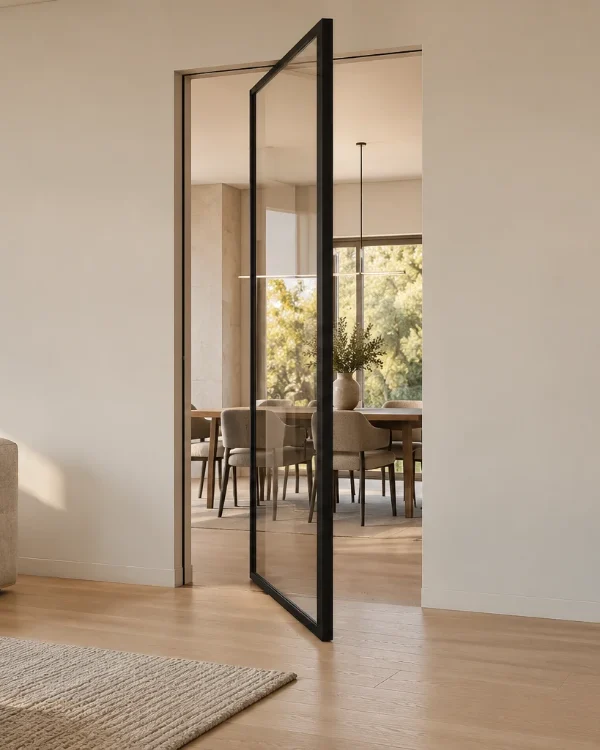
Black-frame glass
A slim black frame around clear or frosted glass, in one lite or several.Offices, dividers, wine rooms
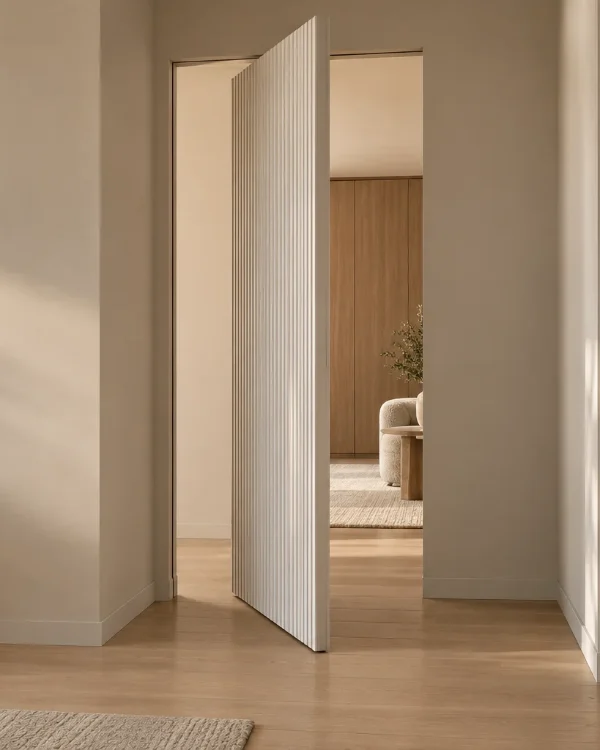
Vertical fluted
Evenly spaced vertical grooves over the full height of the door.Primary suites, dressing rooms
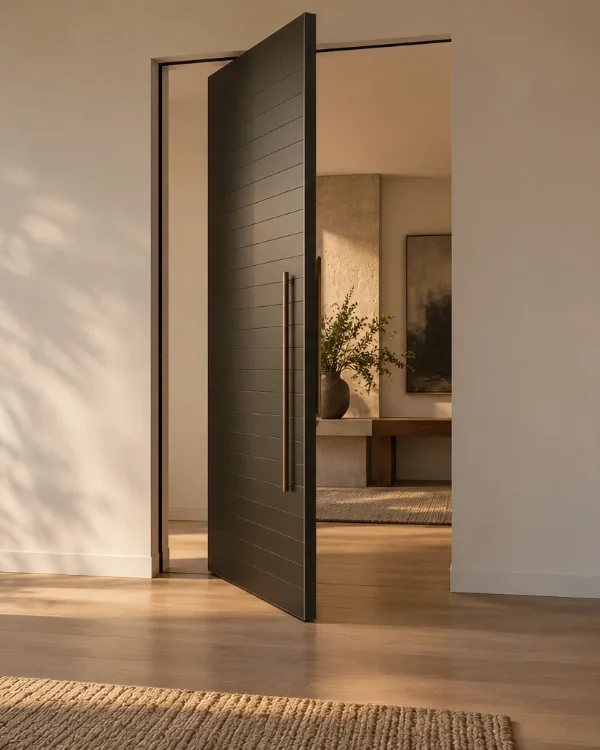
Horizontal grooved
Horizontal reveals across the face, for a plank look.Living and dining dividers
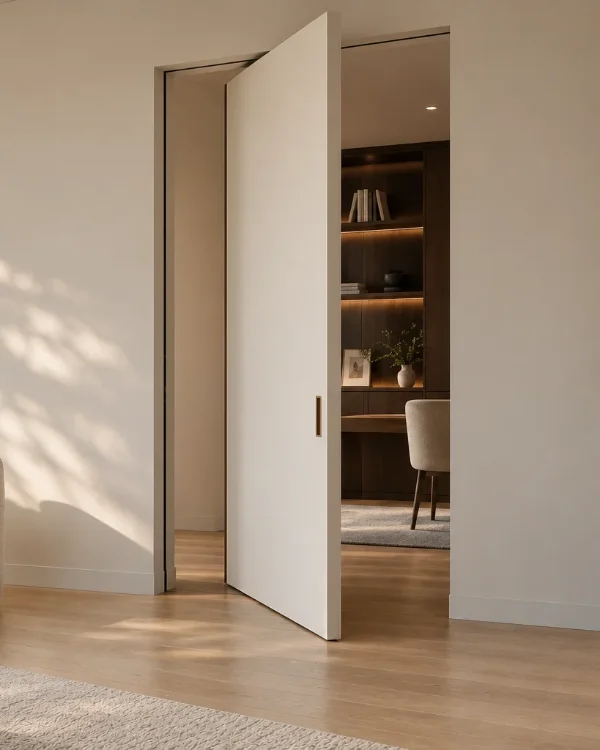
Painted flush
A painted pivot set flush in the wall, with minimal hardware.Pantries, closets, media rooms
Popular colors and finishes
- Natural white oakWood veneer
- WalnutWood veneer
- Matte blackPaint
- Warm whitePaint
- CharcoalPaint
Images show each style, not a specific product. Pick one as your reference, or send your own photo or sketch. Send the color, pattern or photo you want, and your quote confirms it before production.
03 — Center or offset
Choose the Pivot Position
Where the axis sits sets the walkthrough width, the swing and the load on the hardware. It is fixed once the door is machined.
Center pivot
The axis sits at the middle of the door, so the door turns like a revolving panel.
- Opens into two passages, each under half the width
- Suits room dividers and feature openings
- No added sideways load on the pivots
Offset pivot
The axis is set in from one edge, so most of the door swings to one side and a short tail swings to the other.
- One wider walkthrough
- The tail needs room on the opposite side
- The closer the axis sits to the edge, the more sideways load on the pivots
One way or both ways
Single-action doors open one way to a stop. Double-action doors swing both ways; with a closer, they return to closed.
- Self-closing, free swing or hold-open
- Handing set by pivot side and swing
- Check the whole swing path for walls and fixtures
In commercial hardware schedules, “center-hung” and “offset” describe where the pivot sits in the door’s thickness. On this page they describe where it sits across the door’s width. Mark the pivot position on your drawings.
04 — Pivot hardware
The Hardware Sets the Door
Pivot systems differ in where they mount, how they control the door and what they carry. Choose the system first, and send it with your drawings.
In-door pivot
The mechanism is set into the bottom of the door. Only a small plate in the finished floor shows, so the floor needs only a shallow recess.
In-floor closer
The closer sits in a box set into the floor. The box and any wiring have to be placed before the floor is finished.
Self-closing and damping
Hydraulic systems slow the door and bring it back to closed. Speed and latching are adjustable on many systems.
Hold-open positions
Many systems hold the door at set angles, such as closed, 90° or fully open. Free-swing pivots have no closer.
Rated capacity depends on the hardware system, the door’s width and the pivot position, not on weight alone. Send the pivot model or its spec sheet with your drawings. Your quote confirms the construction for each opening.
05 — Tall doors
What Keeps a Tall Door Flat
A pivot door has nothing along its height to hold it straight, so construction and finish matter more than on a hinged door.
- No side hingesThe door is held only at the top and bottom, so it has to stay flat on its own.
- Height and widthDoors taller, wider or thicker than standard, made to the sizes on your drawings.
- Same finish on both facesMatching faces keep the door in balance. A different finish on each side can pull a tall door out of flat.
- CoreSolid or hollow core, set for each opening on your drawings. A solid core cuts more sound.
- Thick enough for the hardwareConcealed pivot systems set a minimum door thickness. The door is made to the system you choose.
Built in our factory
Options That Help a Door Last
What we can build into your doors, and why it matters. Every order is specified per project, and your quote confirms what’s included.
- No edge strip to peel
Many veneer doors are edged with a thin glued-on strip, and that strip is often the first thing to lift or chip. On our veneer doors, our factory’s China-patented panel-bending technology folds the veneered panel around the edge in one piece, so there’s no strip and no seam at the edge.
- Plywood frames and edges
When your order includes frames, jambs and casings, we can make them in plywood instead of MDF. Plywood holds hardware screws firmly and swells less than MDF when moisture gets in; MDF absorbs moisture, then swells and softens.
- UV-cured finish
A UV-cured coating is available for veneer and painted finishes. It hardens under UV light at the factory, so the door arrives finished, with no spraying or drying on your site.
06 — Before you order
Six Things to Decide First
Most of these are fixed once the door is machined or the floor is finished.
- Size and thickness
Width, height and door thickness, checked against the pivot system’s limits.
- Pivot position
Center or offset, and the exact distance from the edge.
- Swing
One way or both ways, which way it opens, and the handing.
- Movement
Free swing, self-closing, soft close or hold-open angles.
- Floor and head
Floor finish, any recess, and a solid head for the top pivot.
- Lock and pull
Lock, latch or magnets, and a pull that suits the swing and clear width.
07 — Questions
Pivot Door Questions
More on configurations and finishes: Custom Interior Doors.
What is a pivot door?
A door that turns on a vertical axis, with a pivot at the top and the bottom, instead of on hinges along one edge. The weight goes into the floor rather than the door frame.
What is the difference between a center and an offset pivot?
A center pivot sits at the middle of the door, so the open door splits the opening into two passages. An offset pivot is set in from one edge, giving one wider walkthrough and a short tail that swings the other way.
Does a pivot door give a full-width opening?
No. The open door stands in the opening, so the walkthrough is narrower than the door. An offset pivot gives more clear width than a center pivot.
Do pivot doors need floor work?
Usually. In-door pivots need only a shallow recess in a flat, level finished floor. In-floor closers sit in a box set into the floor, so they are planned before the floor is finished.
Can a pivot door have a lock?
Yes. Hardware is your choice: the lock and handle you specify, or pre-boring for hardware you source yourself.
Are pivot doors good for privacy and sound?
They run with gaps at the floor and edges, so they let more sound through than a sealed hinged door. Seals and a solid core help.
Do you supply pivot entry doors?
Yes. Pivot entry doors are on our Exterior Doors page. This page covers interior pivot doors.
What do you need to know about the hardware?
The pivot model or its spec sheet, with your drawings. Its limits guide the door’s thickness and construction. For the lock and handle, hardware is your choice: the lock and handle you specify, or pre-boring for hardware you source yourself.
What affects the cost of an interior pivot door?
Size and thickness, the finish, the pivot system and whether it closes on its own, and whether we supply the frame. Send your opening for a quote, or see price examples in the estimator.
What is the lead time?
Custom door orders typically take 12–14 weeks from the start of production to delivery at your site. Production starts once your final specification is signed and your 50% deposit has cleared.
Do you install?
We supply; your installer installs.
Start with the opening
Send Your Opening
Send what you have; we reply by email within 1–2 business days. Attach up to 5 files: PDF, photos, Excel or Word. Finish samples are available on request; you cover the shipping.
- Opening width and height
- Center or offset pivot
- Swing and handing
- Floor finish
- Finish and hardware
- Project city and state
Or email info@baraven.com · La Mirada, CA: visits by appointment