
Hidden Doors
Hidden Flush-to-Wall Doors, Made to Your Opening
Doors that sit flush with the wall on concealed hinges, so the door reads as part of the wall. Made to your opening in paint, wood veneer, laminate or any finish you need.
- Flush with the wallNo casing on the flush side
- Concealed hingesMagnetic-latch locks available
- Made to your openingSizes from your drawings
- 12–14 weeksProduction start to delivery at your site
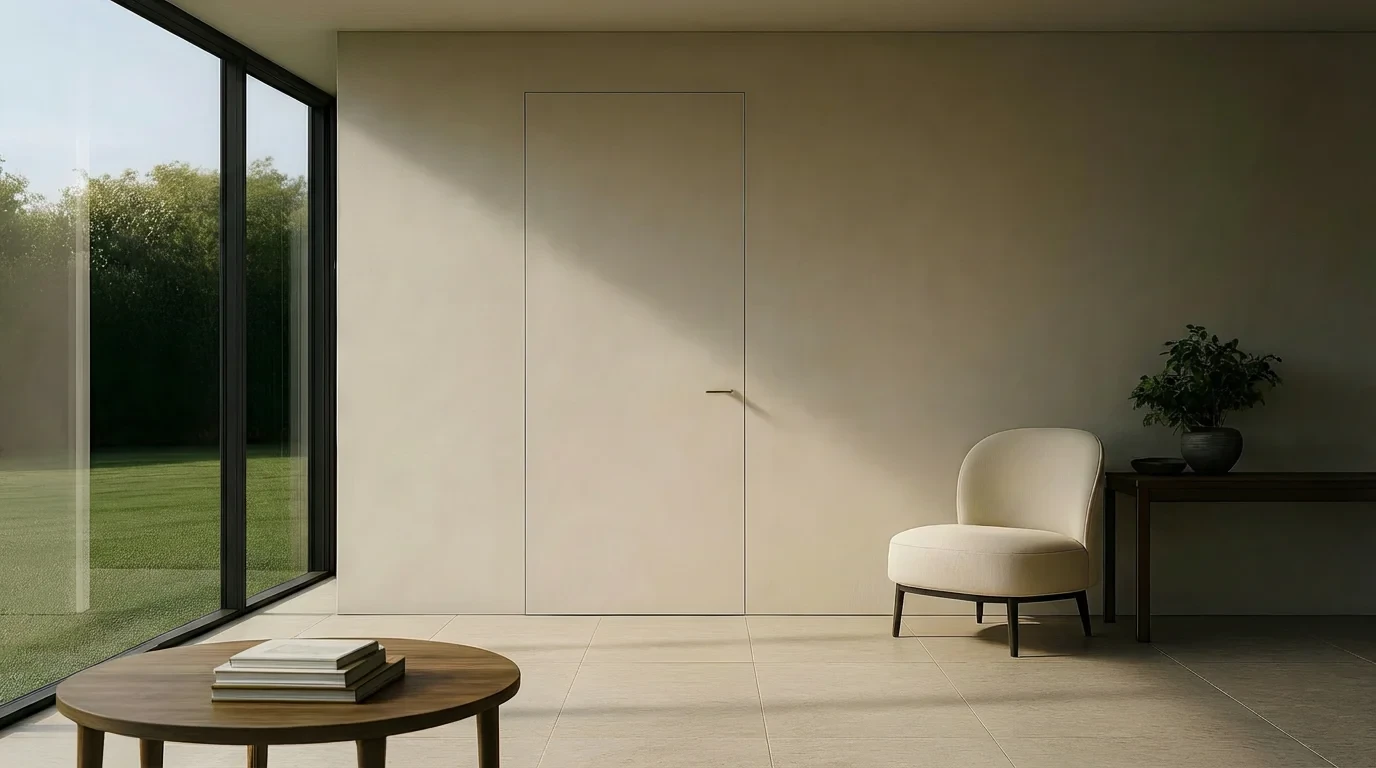
01 — How it disappears
What Makes a Door Disappear
A hidden door is a set of details that work together. Miss one, and the door shows.
- One plane
The door face sits level with the wall, with only a fine, even shadow gap around it.
- No casing
The jamb is set flush with the wall and finished over, so no trim shows on the flush side.
- Concealed hinges
Hinges set into the door edge and frame, out of sight when the door is closed.
- Matching finish
Painted, veneered or paneled to match the wall around it.
- Quiet hardware
Nothing projects from the wall: hardware sits flush or out of sight.
- Baseboard carried across
The baseboard can run across the door, so the wall line doesn’t break.
02 — Popular styles
Popular Hidden Door Styles and Colors
Popular looks for hidden doors in U.S. homes. Each one is made to your opening.
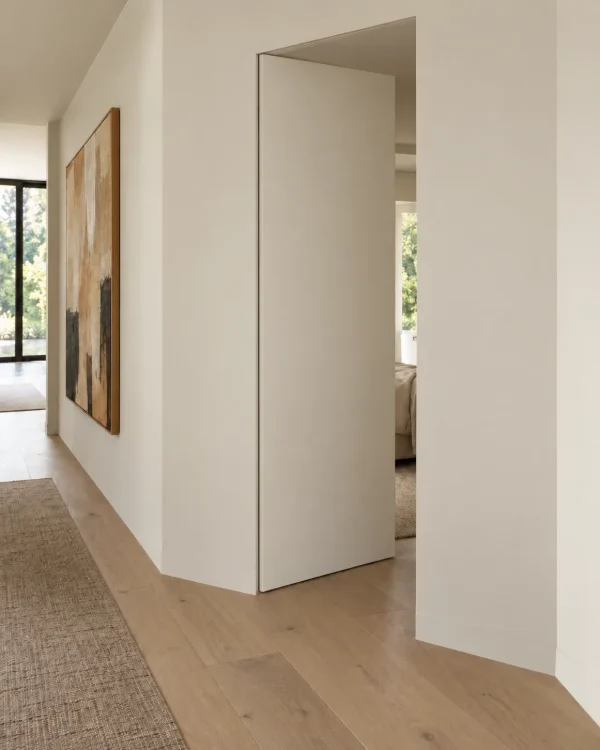
Paint-matched flat panel
A smooth slab painted the wall color, with only a fine gap around it.Closets, powder rooms, pantries
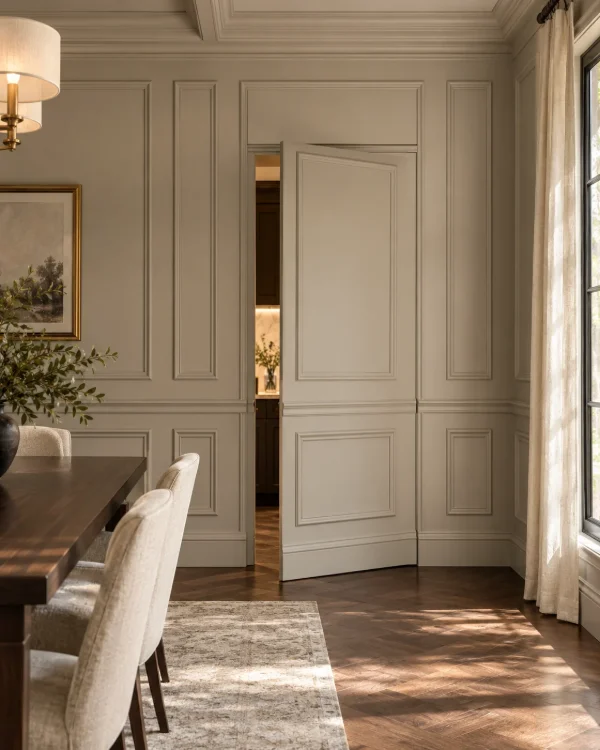
Paneled jib door
Chair rail, molded panels and baseboard carried across the door.Dining rooms, hallways, bedrooms
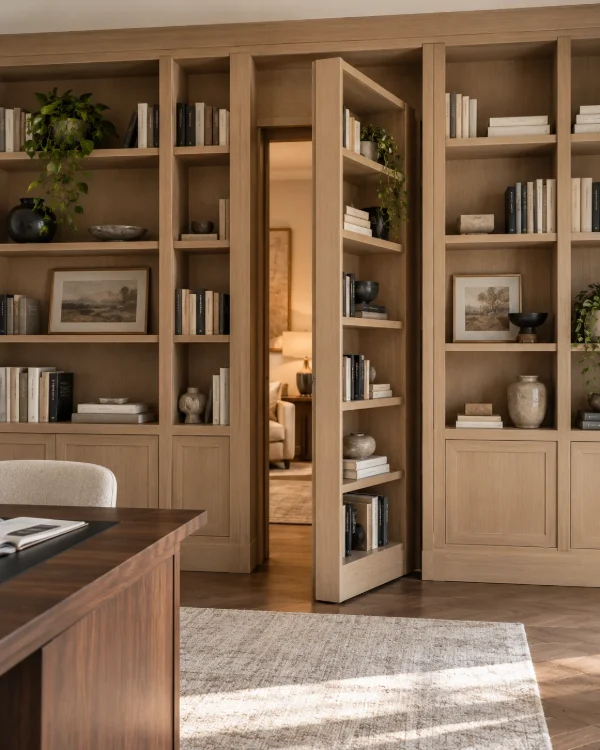
Bookcase door
Full-height shelves on a heavy hinge or pivot, opening to the room behind.Offices, dens, media rooms
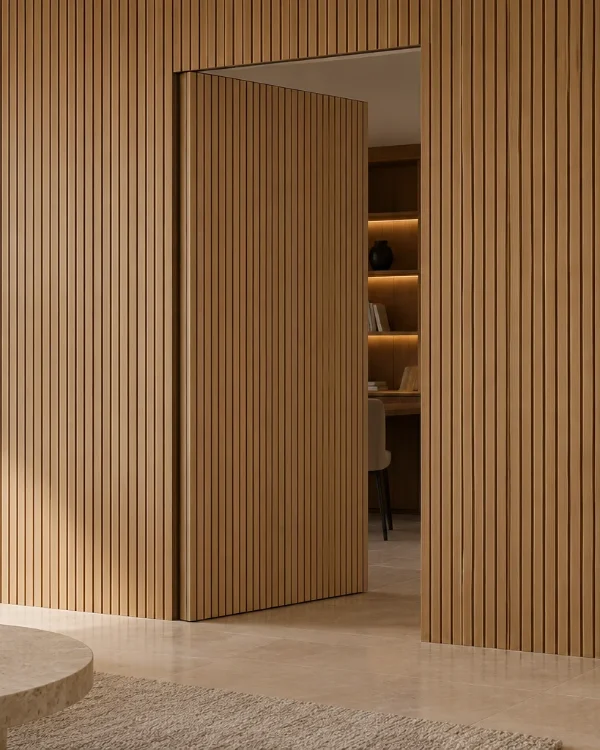
Slatted wood
Vertical slats run across wall and door, with the door edge hidden in a gap.Living rooms, primary suites
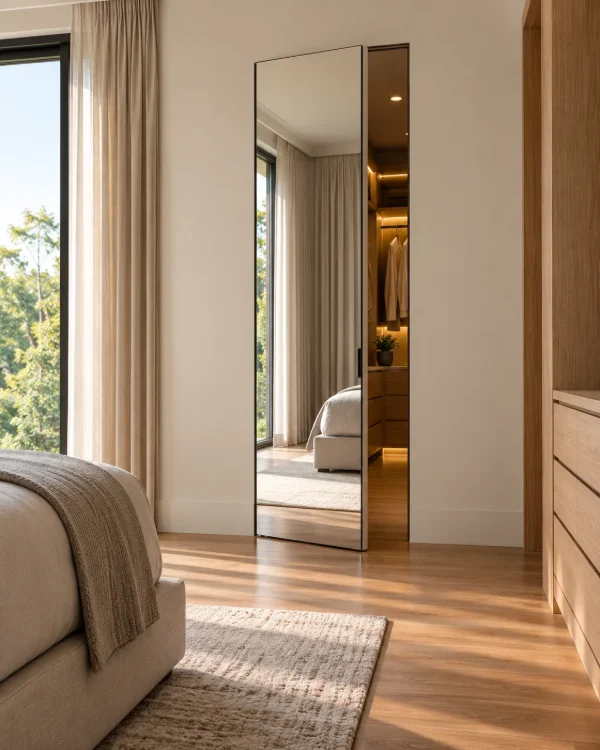
Full-length mirror
A full-height mirror on a flush door that doubles as a dressing mirror.Closets, dressing rooms
Popular colors and finishes
- Warm whitePaint
- Warm greigePaint
- Natural white oakWood veneer
- WalnutWood veneer
- CharcoalPaint
Images show each style, not a specific product. Pick one as your reference, or send your own photo or sketch. Send the color, pattern or photo you want, and your quote confirms it before production.
03 — Push side or pull side
Choose the Flush Side
On most hidden doors only one face is flush with the wall. Decide which room gets the clean wall before anything is made.
- Pull-side flushThe door opens toward the flush side. It is the simpler build.
- Push-side flushThe door opens away from the flush side. The door edge is typically lipped to cover the frame, and the opening angle can be limited.
A push-side flush door with no handle gives no cue to push, so plan a pull or a push plate where visitors use it. Flush on both sides is possible with a special, thicker system; tell us if you need it. Mark the flush face on your drawings.
04 — Your wall
Will It Work in My Wall?
A hidden door is built into the wall, so the wall has to be planned with it.
- Finished wall thicknessMeasure the studs plus drywall, plaster, paneling or tile, not the studs alone. A 2×4 stud wall with 1/2 in. drywall on both sides finishes at about 4 1/2 in.
- Plan it earlyThe concealed frame usually goes in before the wall is finished, so it suits new construction and major renovations best.
- Frame it plumbThe frame follows the wall, so any lean in the opening shows on the door.
- Ceiling and floorFloor-to-ceiling or standard height with wall above; set the final floor level and how the baseboard stops at the opening.
- Light and finishWhere light rakes along the wall, or with dark or glossy paint, a Level 5 drywall finish is typically specified.
05 — Hinges and hardware
The Parts That Make It Work
Weight, thickness and finish decide the hardware. These are custom options you choose.
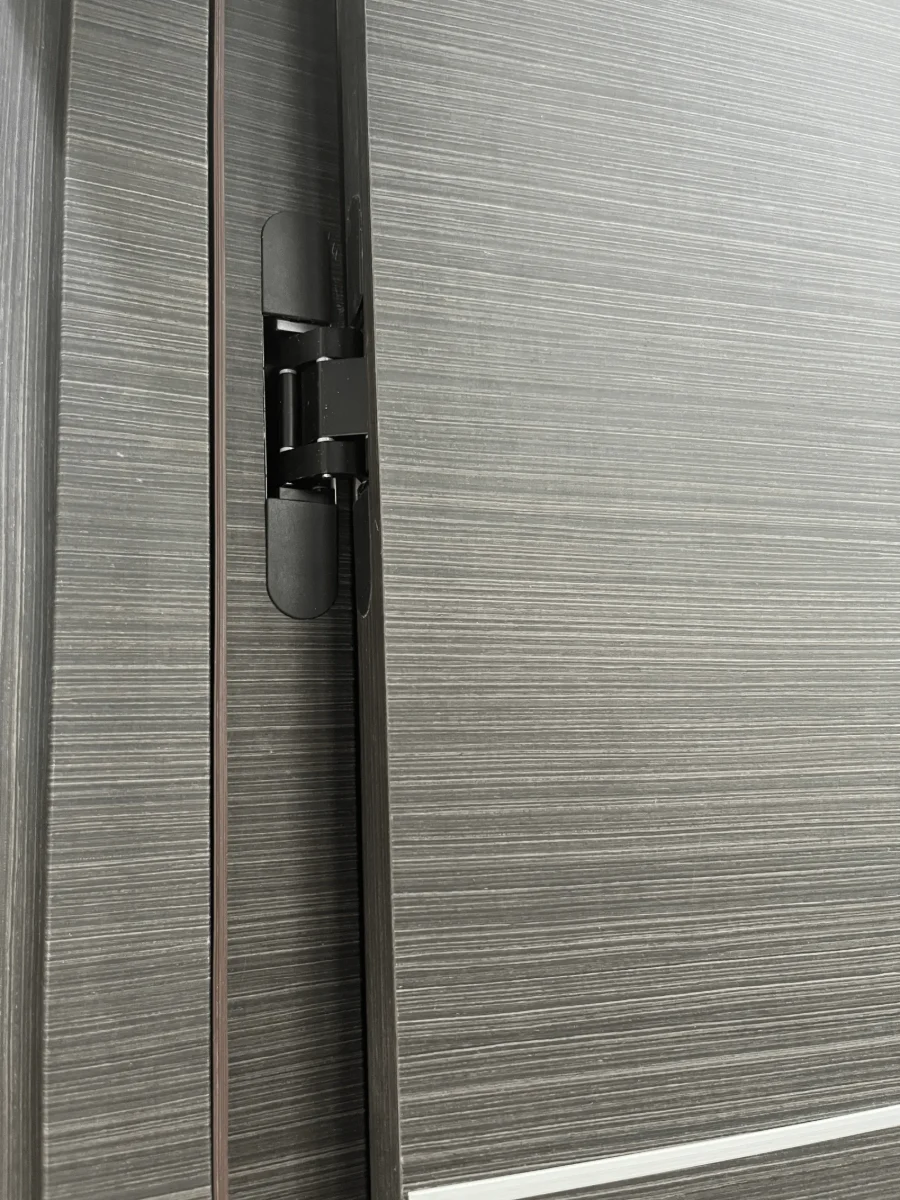
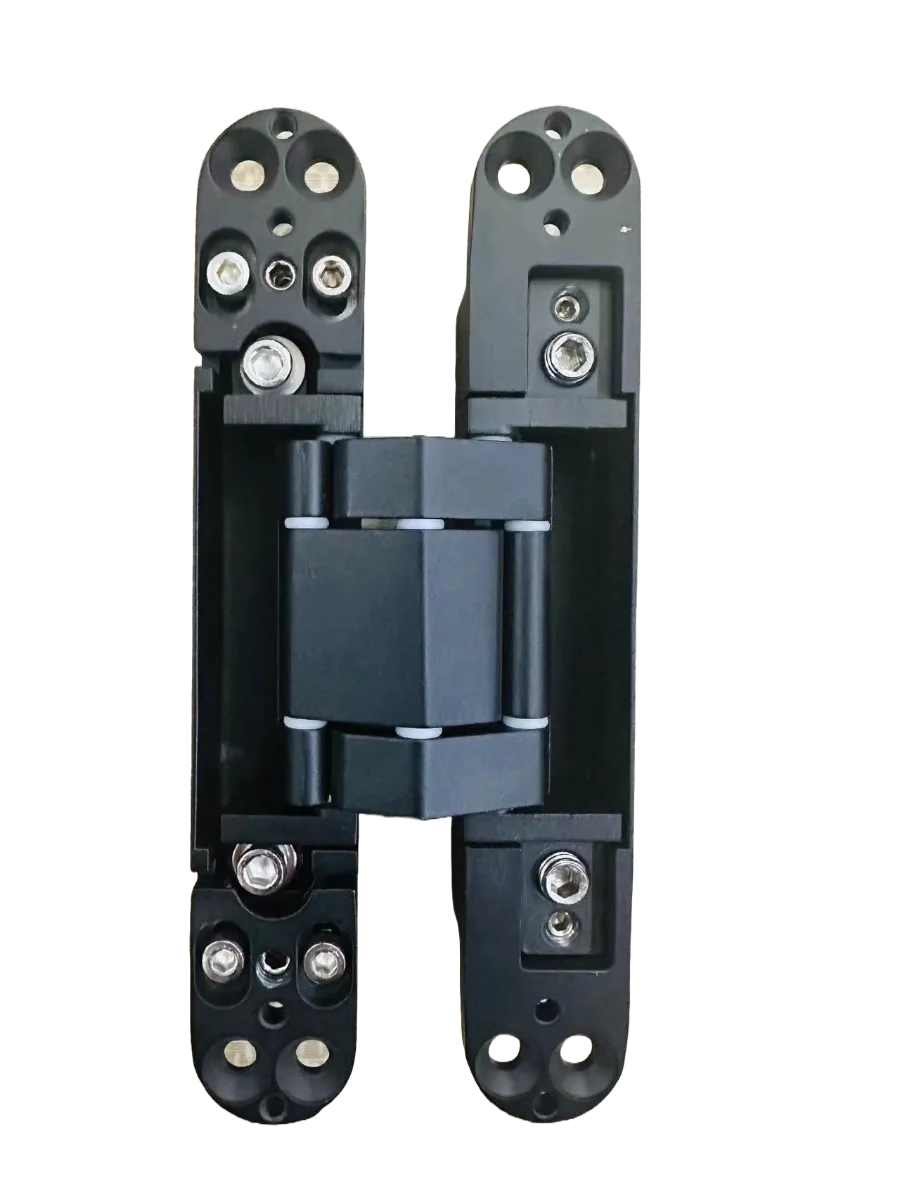
Concealed hinges
Mortised into the door edge and frame. 3D-adjustable types let the installer bring the door into plane with the wall.
Core and weight
Solid or hollow core. A thick, tall or clad door can need a heavier hinge or a third hinge.
Locks and pulls
A magnetic-latch lock with a flat rosette, a recessed pull or a push-to-open latch. Handleless hardware isn’t always best on a heavy door.
Finish to match
Paint matched to the wall, wood veneer, laminate or another finish you need, or our wall panels across door and wall.
Built in our factory
Options That Help a Door Last
What we can build into your doors, and why it matters. Every order is specified per project, and your quote confirms what’s included.
- No edge strip to peel
Many veneer doors are edged with a thin glued-on strip, and that strip is often the first thing to lift or chip. On our veneer doors, our factory’s China-patented panel-bending technology folds the veneered panel around the edge in one piece, so there’s no strip and no seam at the edge.
- Plywood frames and edges
When your order includes frames, jambs and casings, we can make them in plywood instead of MDF. Plywood holds hinge and lock screws firmly and swells less than MDF when moisture gets in; MDF absorbs moisture, then swells and softens.
- UV-cured finish
A UV-cured coating is available for veneer and painted finishes. It hardens under UV light at the factory, so the door arrives finished, with no spraying or drying on your site.
06 — Questions
Hidden Door Questions
More on configurations and finishes: Custom Interior Doors.
What is a flush-to-wall door?
A door set in a concealed frame so its face sits level with the wall, with no casing on the flush side and hinges hidden in the edge. Finished to match the wall, it reads as part of it. Also called an invisible, frameless or jib door.
Can I add a hidden door to an existing wall?
Usually it means opening the wall. Most concealed frames are set before the wall is finished, so hidden doors suit new construction and major renovations best.
Can both sides be flush?
Most hidden doors are flush on one side only: either the side the door opens toward or the side it opens away from. Flush on both sides is possible with a special, thicker system; tell us if you need it.
Do hidden doors need special hinges?
Yes. Concealed hinges are set into the door edge and frame, and the hinge size depends on the door’s weight and thickness. Concealed hinges and magnetic-latch locks are custom options you choose.
Does the door come with its frame?
Your choice: the door alone, or the door with its concealed frame.
Can the door be painted to match the wall?
Yes. Paint, wood veneer, laminate or another finish. Send the color, pattern or a photo of the look you want, and your quote confirms it before production.
Do you supply the hinges, lock and handle?
Yes, if you want us to. Hardware is your choice: the hinges, lock and handle you specify, or pre-boring for hardware you source yourself.
What is the lead time?
Custom door orders typically take 12–14 weeks from the start of production to delivery at your site. Production starts once your final specification is signed and your 50% deposit has cleared.
Do you install?
We supply; your installer installs.
Start with the opening
Send Your Opening
Send what you have; we reply by email within 1–2 business days. Attach up to 5 files: PDF, photos, Excel or Word. Finish samples are available on request; you cover the shipping.
- Opening width and height
- Finished wall thickness
- Which side is flush
- Door only or with frame
- Swing and handing
- Finish and hardware
- Project city and state
Or email info@baraven.com · La Mirada, CA: visits by appointment